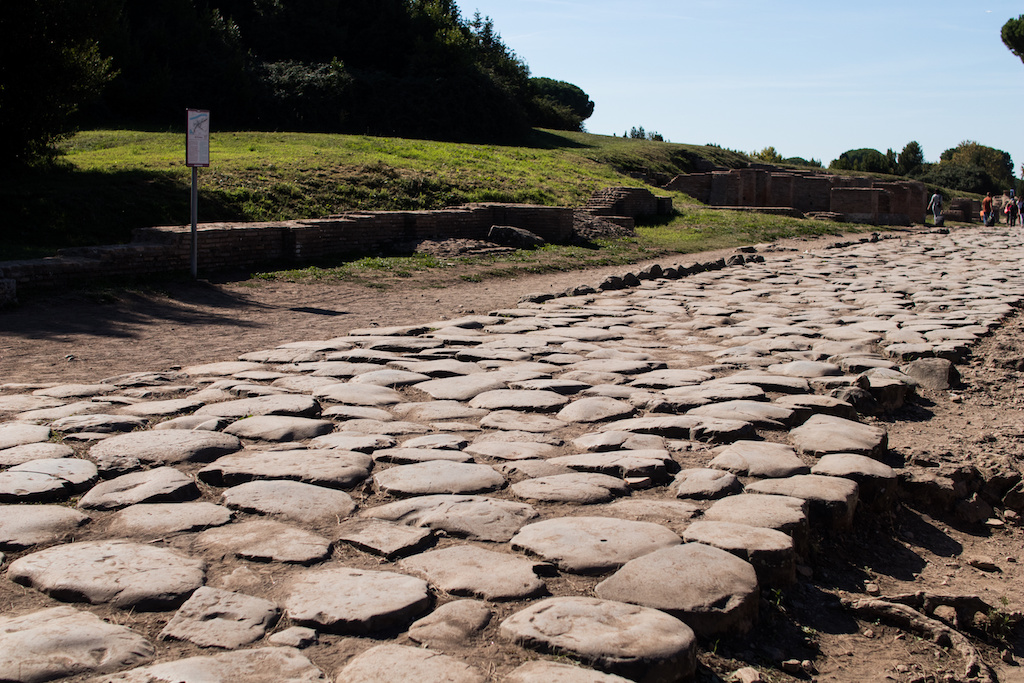
This week we offer you a journey back in time along the Via Flaminia, an ancient Roman artery that crosses Fano, making our city a major commercial hub since the days of the Roman Empire. Built in 220 BC by the consul Gaius Flaminius, this road is a witness to over two thousand years of history and represents a unique opportunity for those wishing to explore Italy's ancient past. We will take you on a discovery of the Via Flaminia, its origins, its historical figures, and its architectural wonders.
What are the origins of the Via Flaminia
The Via Flaminia was built by the Roman consul Gaius Flaminius to connect Rome with Cisalpine Gaul, an area that roughly corresponds to modern-day Northern Italy. The road stretched from the heart of Rome to the Adriatic, crossing the present-day regions of Lazio, Umbria, and Marche. For Fano, the Via Flaminia represented a strategic trade route, fostering the economic and cultural development of the city. Thanks to this connection, the city became an important crossing point for armies, merchants, and travelers heading towards Northern Europe.
How the Furlo area developed
One of the most scenic sections of the Via Flaminia is the passage through the Furlo Gorge, a natural canyon that never ceases to amaze with its natural beauty. A place framed by towering rock walls, which was a mandatory passage for those traveling the Flaminia. The ancient Romans, with their incredible engineering skills, carved a tunnel in the rock to facilitate transit through the Furlo. This engineering feat is still visible today and is a must-see for those wishing to discover the legacy of the Roman Empire immersed in the natural beauty of Marche.
What is the history of the Furlo Tunnel
The original tunnel was hand-carved by the ancient Romans using a clever technique that involved heating the rock with fire and then cooling it with water and vinegar, causing the rocks to crack. The tunnel allowed safe passage even during the floods of the Candigliano River. In 76 AD, Emperor Vespasian ordered the enlargement of the tunnel to further facilitate the passage. This new, larger tunnel measured 38.30 meters in length and remains to this day a symbol of Roman engineering.
Who were the historical figures along the Via Flaminia
Over the centuries, many historical figures have traveled the Via Flaminia. Among them, Julius Caesar who, according to legend, passed through Fano during his march towards Rome. The German poet Goethe and the British politician Winston Churchill were also fascinated by this historic road. But the Flaminia was not only a passage for illustrious figures of history. It also served as a connecting point between different cultures and peoples, facilitating exchanges not only economic but also cultural.
How to explore the Via Flaminia today
Today, the Via Flaminia continues to be a fascinating route for those who love history, archaeology, and nature. Walking along this ancient road, you can admire the remains of bridges, tunnels, and support walls built by the Romans, as well as picturesque villages and breathtaking landscapes. Among the most remarkable points of interest are the remains of the Roman viaduct near the abbey of Petra Petrusa, a testament to the grandeur of the engineering works of the time. A hike along the Via Flaminia offers a unique experience, allowing you to relive history in a natural setting of great beauty.
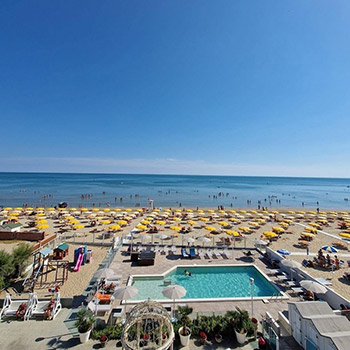
And after exploring the Via Flaminia and its wonders, what could be better than relaxing at Hotel CasaDei? Our hotel in Fano is the ideal starting point for your historical excursions and to discover the hidden treasures of the city and its surroundings. Take advantage of our offers and book your stay: we await you to offer you an unforgettable experience of history, nature, and relaxation.
29/09/2024